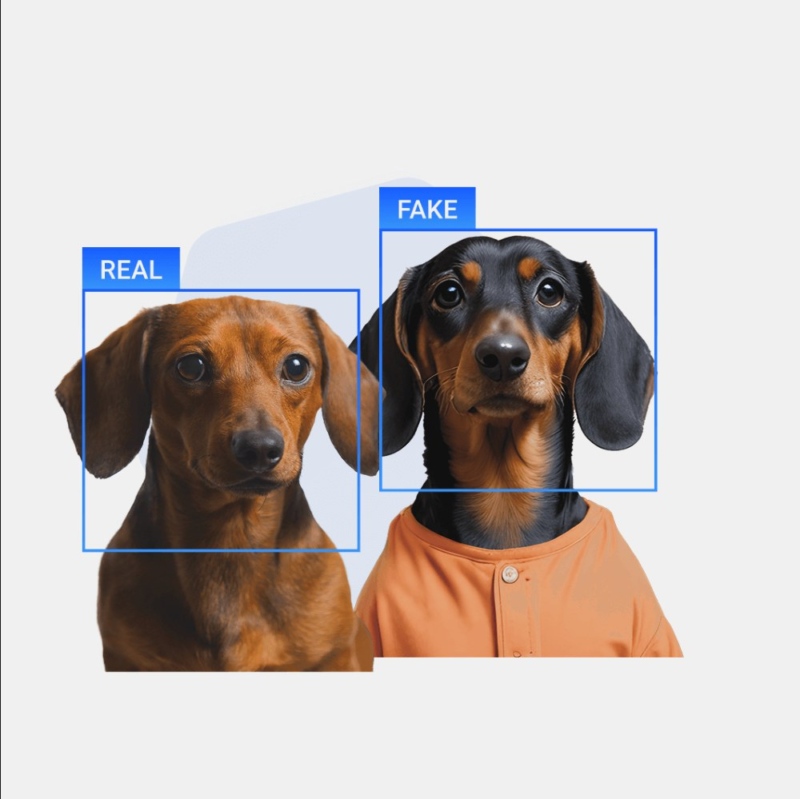
How to Spot AI-Generated Video Content in 2026
In 2026, generative models are advancing at remarkable speed, producing scenes with convincing lighting, motion, and human behavior. As visual content becomes harder to distinguish from real footage, an automated AI video detector is becoming a basic necessity for fact-checking, especially when a clip lacks a verifiable source or context.
Visual Markers of Synthetic Video
Synthetic footage often preserves subtle visual artifacts that real cameras rarely produce. Objects may react incorrectly to gravity, background items can merge during transitions, and fast camera movement may distort geometry. These motion inconsistencies are difficult to notice at first, yet the smallest details of the human body most often reveal that a video is fabricated.
Hands, fingers, teeth, hair, and the edges of clothing may change shape between frames without a physical reason. Careful viewing at reduced speed can expose these unstable details even when the overall scene appears highly realistic.
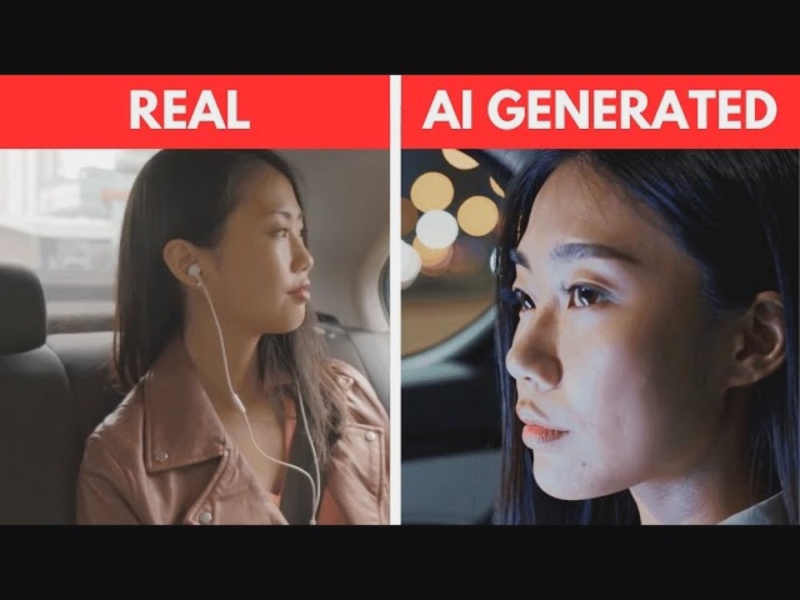
Unrealistic Skin Texture and Facial Expressions
AI-generated faces frequently show excessive skin smoothness, unnatural blinking, and a lack of facial micro-expressions that normally accompany speech and emotion. Skin texture anomalies may appear as uniform highlights or shifting pores. Developers pursuing humanizing AI try to give generated people a more natural human appearance, but small emotional gaps often remain.
A real face constantly changes through tiny movements around the eyes, mouth, and forehead. When those transitions look delayed, repetitive, or strangely symmetrical, the clip deserves additional verification rather than immediate trust.
Audiovisual Mismatch and Sound Quality
Generated videos may contain room acoustics that do not match the visible location, synthetic voice cadence, or speech with an overly even emotional pattern. Natural background noise can also disappear, repeat, or fail to respond to movement in the scene. Because audio-video desynchronization often survives even polished visuals, audio-track analysis remains a reliable way to verify video material.
Analysts can compare reverberation, volume changes, breathing, pauses, and nearby environmental sounds with what the camera shows. Inconsistent acoustic evidence is especially revealing when a speaker appears to move through different spaces without any corresponding change in the sound field.
Speech Synchronization and Caption Overlay
In fabricated speech, a lip-sync mismatch may appear as a micro-delay between lip articulation and the words being heard. Mouth shapes can form a fraction too early, while consonants may produce no precise visible movement. Automated captioning from cap pro can help compare speech structure with delivery speed and expose irregular timing.
Captions should not be treated as proof on their own, because they can also be generated or edited. Their value increases when punctuation, pauses, syllable timing, and visible mouth movements are checked against the original audio.
Generative Systems of 2026 and Their Verification Methods
Most suspicious online footage comes from a limited group of leading AI video generators, so analysts benefit from recognizing the recurring patterns associated with each system. Model-specific motion, lighting, physics, and metadata inspection can narrow the source and guide a more focused verification process:
- Google Veo 3.1;
- OpenAI Sora 2;
- Runway Gen-4.5;
- ByteDance Seedance 2.0;
- Kling AI;
- MiniMax Hailuo.
Reliable detection combines visual attention to physical details with software analysis of frames, audio, and metadata. Neither method is sufficient in every case, but together they make synthetic content much harder to hide behind convincing realism.