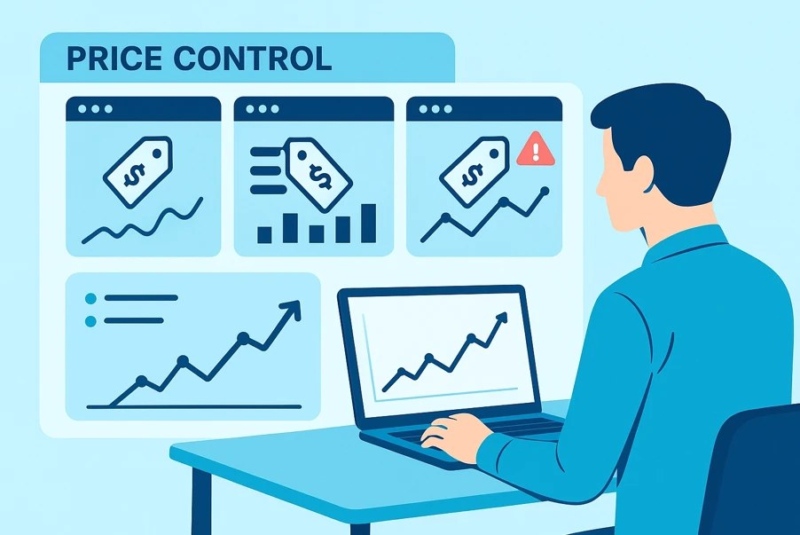
Competitor price tracking – Why Daily Monitoring Is Key to Profitability
In the world of e-commerce, the winner isn’t always the one with the best product — it’s the one who reacts the fastest. One competitor drops their price by 5%, another launches a discount campaign, a third offers free shipping — and suddenly you’re out of the game.
That’s why competitor price tracking isn’t something you do once a week or only “when there’s time.” It’s a daily routine if you want to stay competitive and profitable.
Why Pricing Is Your Top Lever in E-Commerce
Shoppers don’t wait. They go where it’s cheaper, faster, and easier. Most of the time, the key decision factor is price — especially on marketplaces or when selling popular items.
If your price is even slightly higher, you’re out of the cart. Worse — if you don’t know your competitor launched a promo, you don’t even have a chance to compete.
What Competitor Price Tracking Actually Means
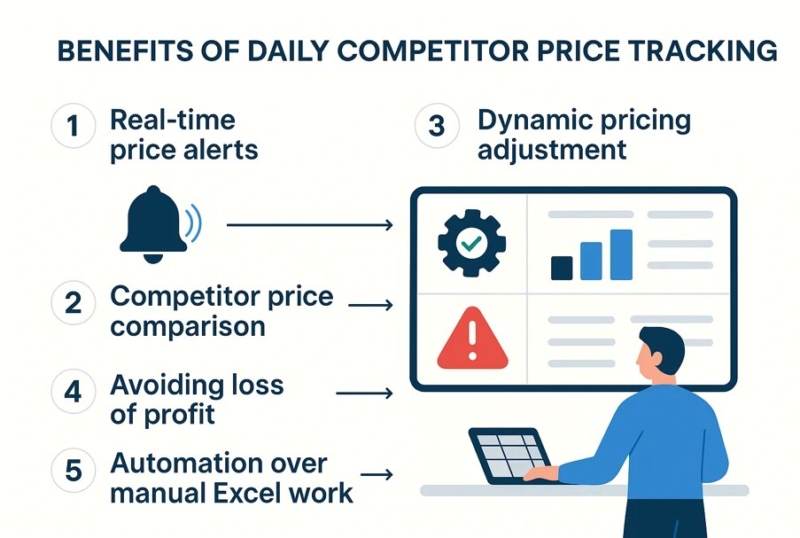
It’s the process of automatically monitoring what your competitors are charging for the same or similar products. This includes:
- Scraping websites and marketplaces
- Collecting data on discounts, availability, shipping
- Matching items by SKU, title, or attributes
- Generating reports and real-time alerts
The result? You always know who changed what, and by how much — and can act on it.
Why You Need to Track Daily, Not Occasionally
Prices don’t just change — they shift constantly. Think holiday sales, clearance events, inventory levels, exchange rates, and spontaneous promotions.
Missing even one day of monitoring can result in:
- Losing sales due to higher prices
- Undervaluing your product and shrinking margins
- Ignoring competitor campaigns and losing visibility
Daily competitor price tracking is like checking your email or web analytics — a must-have habit.
Using Competitor Data for Dynamic Pricing
Once you have up-to-date price data, you can enable dynamic pricing — adjusting your own prices based on:
- Competitive positioning
- Demand and inventory
- Day of the week or time of day
- User behavior
Without tracking, dynamic pricing is just guesswork. With tracking, it becomes a strategic edge.
Why Excel Isn’t a Competitor Price Tracker
Manual tracking sounds simple… until you have dozens of products and multiple competitors.
An Excel file won’t:
- Collect data automatically
- Notify you when competitors update prices
- Scale across hundreds of SKUs or daily changes
- Integrate with your e-commerce or pricing system
A competitor price tracker automates the entire process — running 24/7 while you focus on strategy.
How the Price Control Competitor Price Tracker Works
The Price Control competitor price tracker is more than just a data scraper — it’s a complete monitoring and decision-support system:
- Auto-collects pricing data from your selected competitors
- Works with marketplaces, online stores, and B2B catalogs
- Supports filters, grouping, and category-specific rules
- Sends real-time alerts via email or Telegram
- Exports data to Google Sheets, Excel, or via API
Plus, it’s fast, stable, and backed by real human support — not just a chatbot.
If You’re Not Watching Them, They’re Watching You
The e-commerce battlefield shifts every day. If you’re not tracking prices, you’re giving competitors the upper hand.
Competitor price tracking is no longer optional. It’s a critical component of winning — especially when combined with tools like the Price Control competitor price tracker.
Start now, stay ahead tomorrow.